
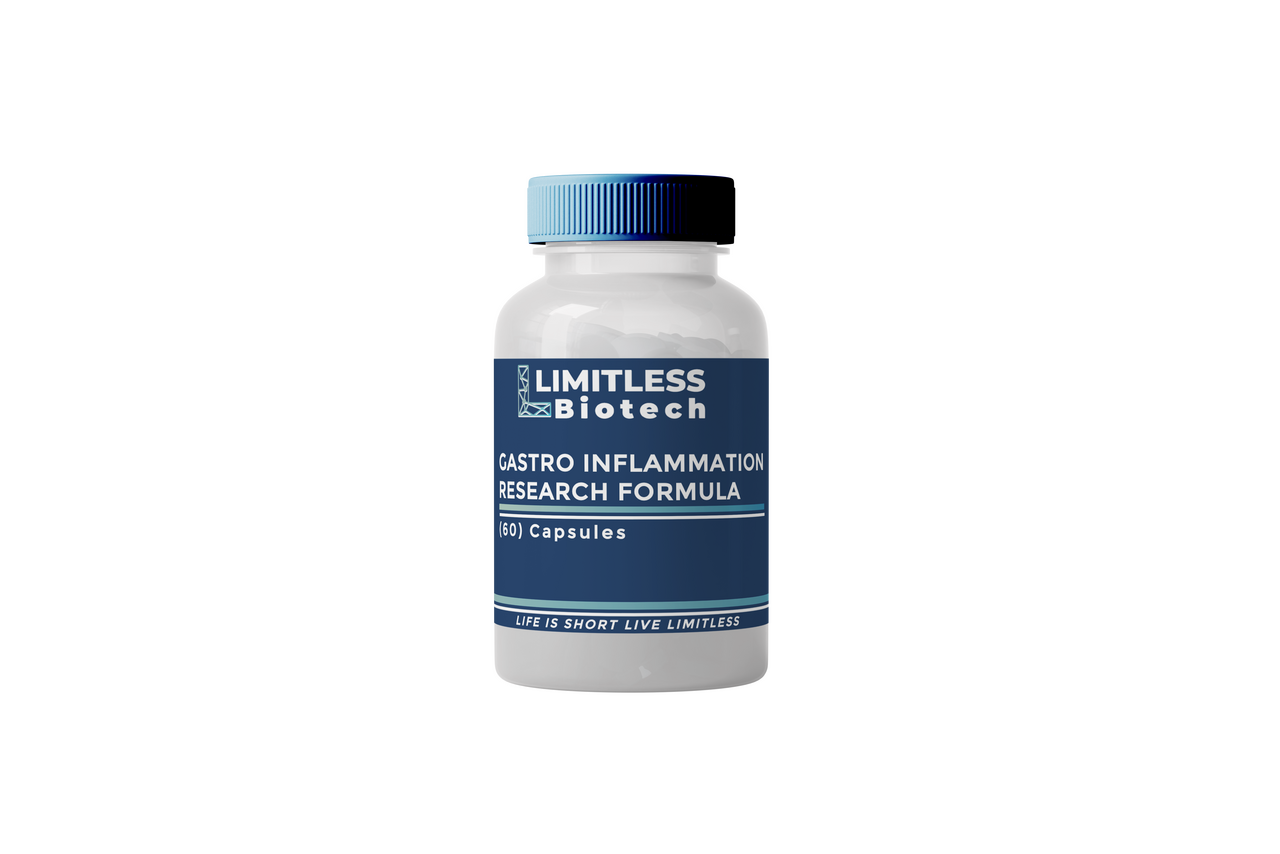
Gastro Inflammation Research Formula – BPC-157, KPV, N-Acetyl Larazotide
Gastro Inflammation Research Formula contains peptides for laboratory studies on gastrointestinal tissue repair, cellular regeneration, and inflammation control. This formula combines BPC-157, KPV, and N-Acetyl Larazotide. Scientists study this compound to measure gut healing, intestinal barrier function, and cellular signaling. Laboratory models record peptide effects on tissue repair, epithelial health, and molecular activity. Researchers track cellular responses and immune activity in experimental setups.
BPC-157 supports angiogenesis and tissue regeneration in gut tissue. Scientists measure collagen formation, vascular growth, and cellular migration. Laboratory experiments record tissue structure, cellular regeneration, and extracellular matrix activity. Researchers measure tissue repair markers and molecular signaling.
KPV has anti-inflammatory properties. Scientists examine cytokine production, immune cell signaling, and cellular response. Laboratory studies record inflammatory markers, cell signaling, and tissue activity. Researchers track peptide effects on inflammation and immune balance.
N-Acetyl Larazotide maintains intestinal barrier integrity. Scientists measure tight junction activity, epithelial function, and barrier permeability. Laboratory experiments record cellular signaling, tissue activity, and barrier stability. Researchers track molecular responses and epithelial function.
The combination allows scientists to examine multiple biological pathways in gastrointestinal research. Researchers track tissue repair, immune response, and cellular communication. Laboratory models record gut tissue recovery, barrier integrity, and molecular signaling. Scientists collect data on tissue regeneration and cellular activity.
The formula comes as a lyophilized powder. Researchers reconstitute with bacteriostatic water. Accurate measurement ensures reproducible dosing in experiments. Scientists handle the compound using sterile laboratory procedures.
Laboratories store the formula between 2°C and 8°C. Refrigeration preserves peptide structure. Light and heat exposure damages molecular stability. Researchers follow strict handling protocols.
Gastro Inflammation Research Formula provides a research compound for studies on gastrointestinal tissue repair, barrier integrity, and inflammation control. Scientists measure tissue recovery, cellular signaling, and immune response.
Product Specifications
| Specification | Details |
|---|---|
| Product Name | Gastro Inflammation Research Formula |
| Peptide Components | BPC-157, KPV, N-Acetyl Larazotide |
| Product Type | Research Peptide Blend |
| Form | Lyophilized Powder |
| Research Focus | Gastrointestinal Tissue Repair, Barrier Integrity, Inflammation |
| Preparation | Reconstitution with Bacteriostatic Water |
| Storage | Refrigerate at 2–8°C |
| Packaging | Sterile Laboratory Vial |
| Laboratory Use | Experimental Studies |
| Stability | Freeze-Dried Peptide Compound |
Reviews
There are no reviews yet.