
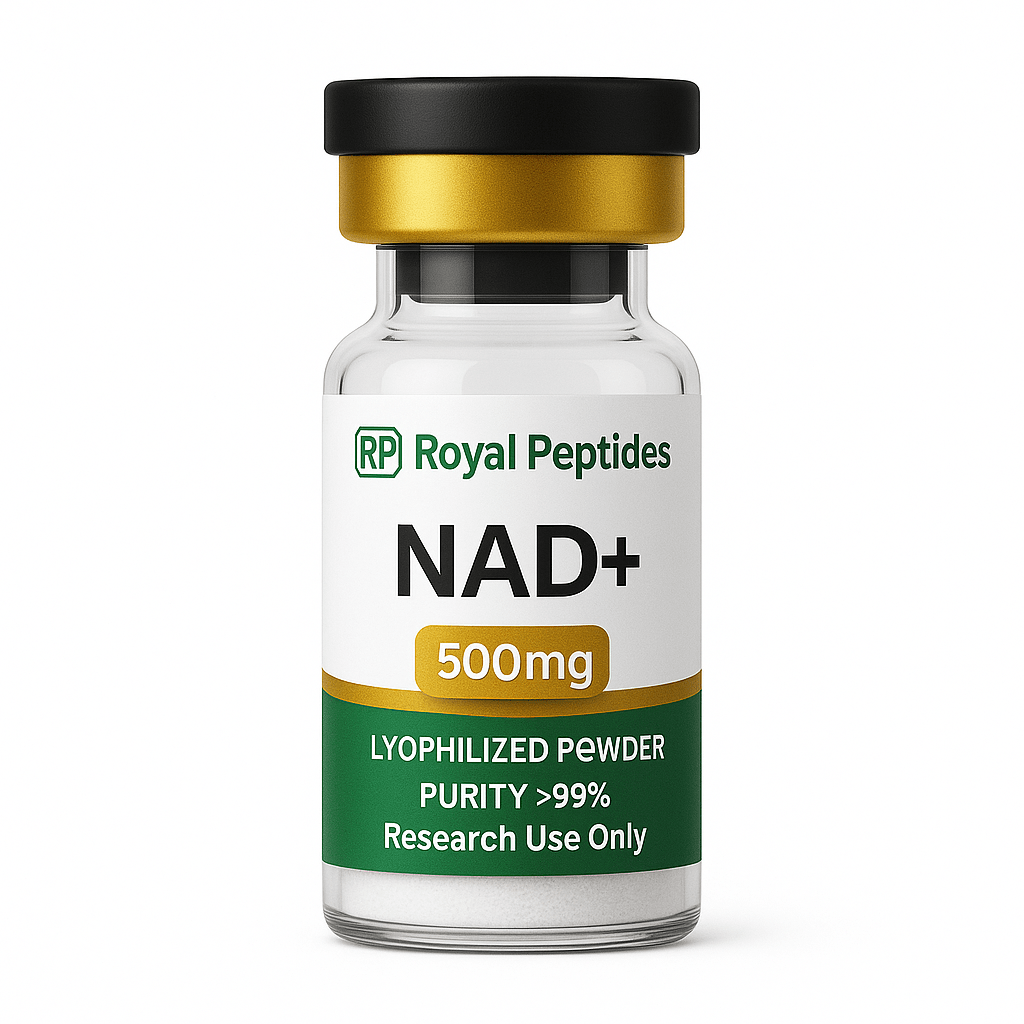
NAD+ (Nicotinamide Adenine Dinucleotide) – Vial / Kit | Research Compound
NAD+ (Nicotinamide Adenine Dinucleotide) is a critical coenzyme studied in laboratories for cellular energy production, metabolic regulation, and DNA repair. Researchers study this compound for its role in redox reactions, mitochondrial function, and enzymatic activity. Laboratory experiments examine NAD+ for its effect on cellular metabolism, signaling pathways, and biochemical reactions essential for energy balance.
NAD+ participates in oxidation-reduction reactions in experimental models. Scientists measure electron transfer, enzymatic activity, and metabolic flux. Laboratory studies record cellular markers linked to ATP production, mitochondrial efficiency, and oxidative balance. Researchers analyze NAD+ impact on protein function, gene expression, and cellular signaling pathways.
The compound supports studies on metabolic regulation, neuroprotection, and aging research. Scientists evaluate its effects on enzymatic processes, energy metabolism, and DNA repair. Laboratory experiments track markers connected to oxidative stress, mitochondrial function, and metabolic stability. Researchers observe NAD+ influence on biochemical pathways and cellular resilience.
NAD+ arrives as a sterile powder in measured vials. The 500mg vial provides a precise amount for laboratory experiments. The 1000mg vial offers larger research quantities. The 500mg Kit contains ten vials totaling 5000mg for extended studies. The 1000mg Kit contains ten vials totaling 10,000mg for large-scale research. Laboratories measure peptide quantities accurately to maintain experimental reproducibility and consistent results.
NAD+ (Nicotinamide Adenine Dinucleotide)
Researchers handle NAD+ under controlled laboratory conditions to maintain molecular integrity. Laboratories store vials in cool, dry environments. Heat, light, and moisture degrade the compound. Proper storage maintains stability, biological activity, and experimental reliability.
NAD+ attracts attention in metabolic research, cellular energy studies, and neuroprotection experiments. Scientists investigate its effects on mitochondrial function, enzymatic activity, and molecular signaling. Laboratory research examines cellular resilience, energy regulation, and protein-mediated biochemical pathways influenced by NAD+.
Manufacturing standards ensure high-purity compound material. Quality control verifies structure, concentration, and batch consistency. Researchers rely on reproducible formulations for accurate laboratory studies and reliable data collection.
NAD+ vials and kits provide practical options for laboratories studying metabolism, energy production, and molecular signaling. Scientists use this coenzyme to examine biochemical pathways, enzymatic activity, and cellular energy processes.
Product Specifications
| Specification | Details |
|---|---|
| Product Name | NAD+ (Nicotinamide Adenine Dinucleotide) |
| Compound Type | Coenzyme / Research Compound |
| Form | Sterile Powder |
| Available Vials | 500mg, 1000mg |
| Kit Options | 500mg Kit (5000mg), 1000mg Kit (10000mg) |
| Intended Use | Cellular energy, metabolic research, DNA repair |
| Laboratory Use | Experimental research |
| Purity Standard | High purity laboratory grade |
| Storage | Refrigerate at 2–8°C, avoid light and moisture |
| Packaging | Sterile Research Vial / Kit |

Reviews
There are no reviews yet.